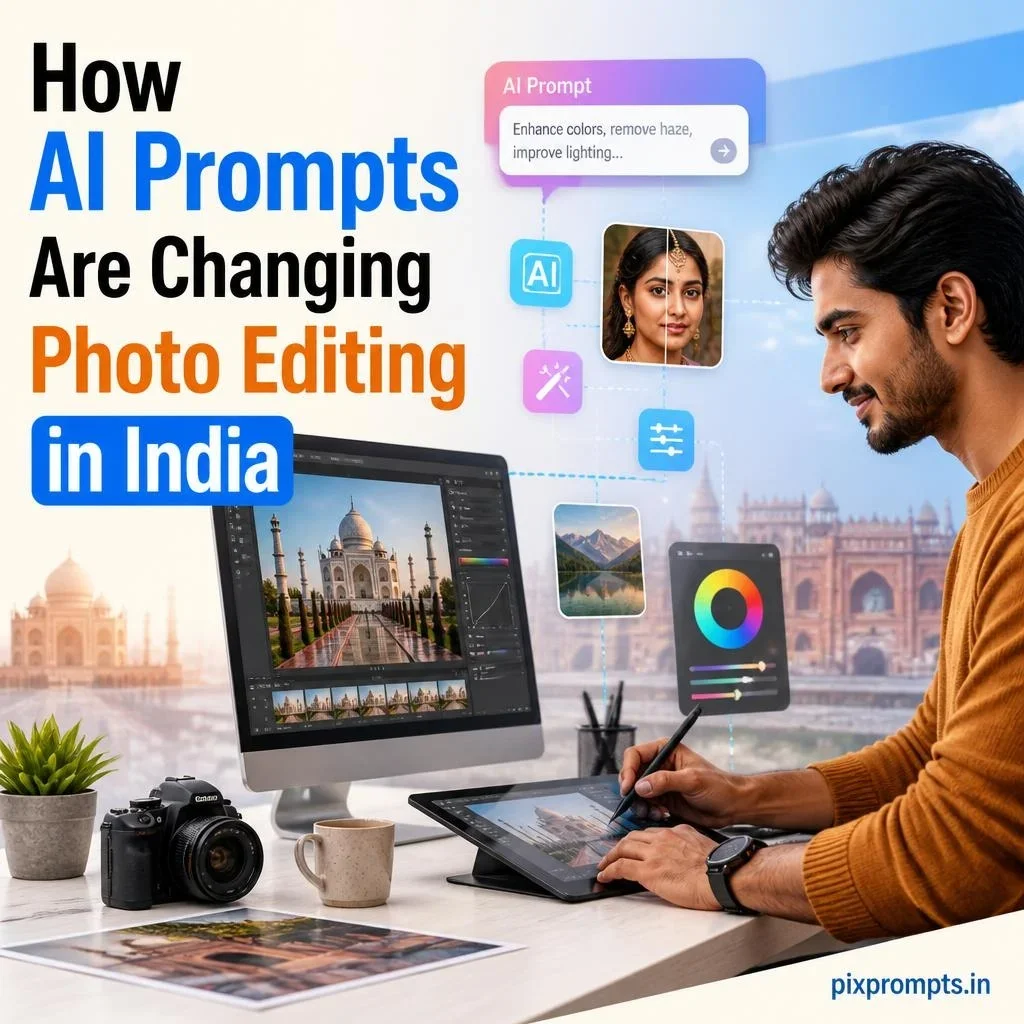
Not long ago, editing a photo meant visiting a studio, learning complex software or settling for basic filters. Today, millions of Indians transform their photos by typing a few lines into Gemini or ChatGPT. Retro saree looks, 3D figurines, festival edits and Ghibli-style portraits have become everyday conversation topics.
This shift is changing how people create, share and even earn from photos. This article explores how AI prompts are transforming photo editing in India, who is benefiting and what responsible use looks like.
From Software Skills to Language Skills
Traditional editing required technical skills with layers, masks and adjustment tools. AI editing relies on describing what you want. This makes creativity accessible to people who never learned editing software, including students, homemakers, small business owners and elders.
Language skills, imagination and cultural knowledge are now as valuable as technical skills.
Cultural Trends Lead the Way
Indian AI trends are deeply cultural: sarees, festivals, weddings, Bollywood-inspired looks, cricket and family moments. Prompts that reflect Indian traditions and aesthetics often go viral because they connect emotionally with millions.
Small Businesses and Creators
Small businesses use AI for product photos, festival banners and social posts. Creators build pages sharing prompts and tutorials. Photographers combine AI with traditional work. New opportunities are emerging for those who learn quickly.
Responsibility and Awareness
With great accessibility comes responsibility. Concerns include privacy, misleading images, deepfakes and consent. Being transparent about AI-generated content, respecting others’ images and protecting personal data are important for a healthy digital culture.
Example: A Small Shop’s Transformation
Consider a small handloom shop that previously posted blurry phone photos. With AI, the owner now cleans backgrounds, adds festival themes and writes captions in Hindi and English. The shop’s page looks more professional, and customers can see products clearly. This kind of change, multiplied across thousands of small businesses, is one of the most practical impacts of AI editing in India.
Similarly, students are building portfolios, homemakers are starting creative pages and elders are restoring family albums.
Skills Worth Learning Now
Clear writing, cultural awareness, basic photo judgement and an understanding of privacy are the skills that matter most in this new world. Learning them early helps you use AI confidently and responsibly, whatever tools come next.
Families are using AI to restore wedding albums and old studio portraits, keeping memories alive for the next generation, which may be one of its most heartwarming uses.
Looking Ahead
As more tools support Indian languages and local styles, AI editing is likely to reach even more people in smaller towns and villages. The creators who teach these skills clearly and responsibly will help shape a positive digital culture.
Prompts Reflecting Indian Trends
Each prompt below is ready to copy. Replace the words in square brackets with your own details before you hit generate.
1. Cultural portrait
Keep my face the same. Show me in a traditional Banarasi silk saree at a ghat in Varanasi during evening aarti, warm lamp light, realistic photo.
2. Small business banner
Keep the product exactly the same. Place this handmade pottery on a festive background with marigolds and diyas, warm light, space for sale text.
3. Cricket fan edit
Keep my face unchanged. Show me cheering in a packed stadium wearing an India jersey, floodlights, joyful energy.
4. Family heritage
Restore and colourise this old family photo naturally, keeping all faces accurate and the vintage feel intact.
5. Regional style
Keep my face the same. Show me in a traditional Assamese mekhela chador in a green tea garden, soft morning light.
6. Bollywood-inspired
Keep my face unchanged. Create a retro Bollywood-inspired poster of me with dramatic lighting and vintage colours, original design.
How to Ride the Indian AI Editing Wave Responsibly
- Learn prompt basics: Understand structure and clarity.
- Explore cultural themes: Use Indian traditions respectfully.
- Apply to real needs: Business, family, content or creativity.
- Stay transparent: Label realistic AI images when needed.
- Protect privacy: Avoid sharing sensitive images.
- Keep learning: Follow updates and new features.
Test, Compare and Keep Notes
Prompt writing is a skill you build through small experiments. Change one word, generate again and compare. Did the lighting change? Did the face become more realistic? Keeping short notes on what each change does is the fastest way to improve.
Many experienced creators keep a simple spreadsheet or notes file with their best prompts, the tool they used and a thumbnail of the result. This becomes a personal reference library you can return to again and again.
Printing Your AI Images
Some of the best AI edits deserve to leave the phone. For prints, choose your highest-quality version, upscale if needed and ask the print shop which size suits the image’s resolution. Matte paper reduces glare and suits artistic styles, while glossy paper makes bright colours pop.
A framed print of a special edit makes a thoughtful gift for birthdays, anniversaries and festivals, especially for elders who do not use social media.
Pro Tips for Better Results
- Regional outfits and festivals create unique, relatable content.
- Combine traditional photography with AI for best results.
- Share prompts to help others learn.
- Use AI to preserve family history through restoration.
- Stay updated with official tool announcements.
Common Mistakes to Avoid
Copying trends without personal touch
Add your culture and story.
Ignoring consent
Respect others’ photos.
Misleading edits
Avoid presenting AI images as real events.
Oversharing personal data
Be cautious with sensitive images.
Frequently Asked Questions
Why are AI photo trends so popular in India?
They are accessible, culturally relevant and easy to share on social platforms.
Can AI editing create jobs?
It is creating opportunities for creators, educators and businesses, alongside changes for traditional roles.
Are regional languages supported?
Many tools support Indian languages, with varying quality.
Is AI editing replacing photographers?
It changes some work, but skilled photographers capture real moments and offer expertise AI cannot replace.
How can I use AI responsibly?
Respect consent, be transparent and protect privacy.
Quick Checklist
Before you finish, run through this short checklist:
- Learn prompt basics
- Explore cultural themes
- Apply to real needs
- Stay transparent
- Protect privacy
- Keep learning
Conclusion
AI prompts are democratising photo editing in India, turning language and imagination into creative power. Embrace cultural creativity, apply AI to real needs and use it responsibly. The future of Indian photo editing belongs to those who combine tradition, technology and thoughtfulness.
