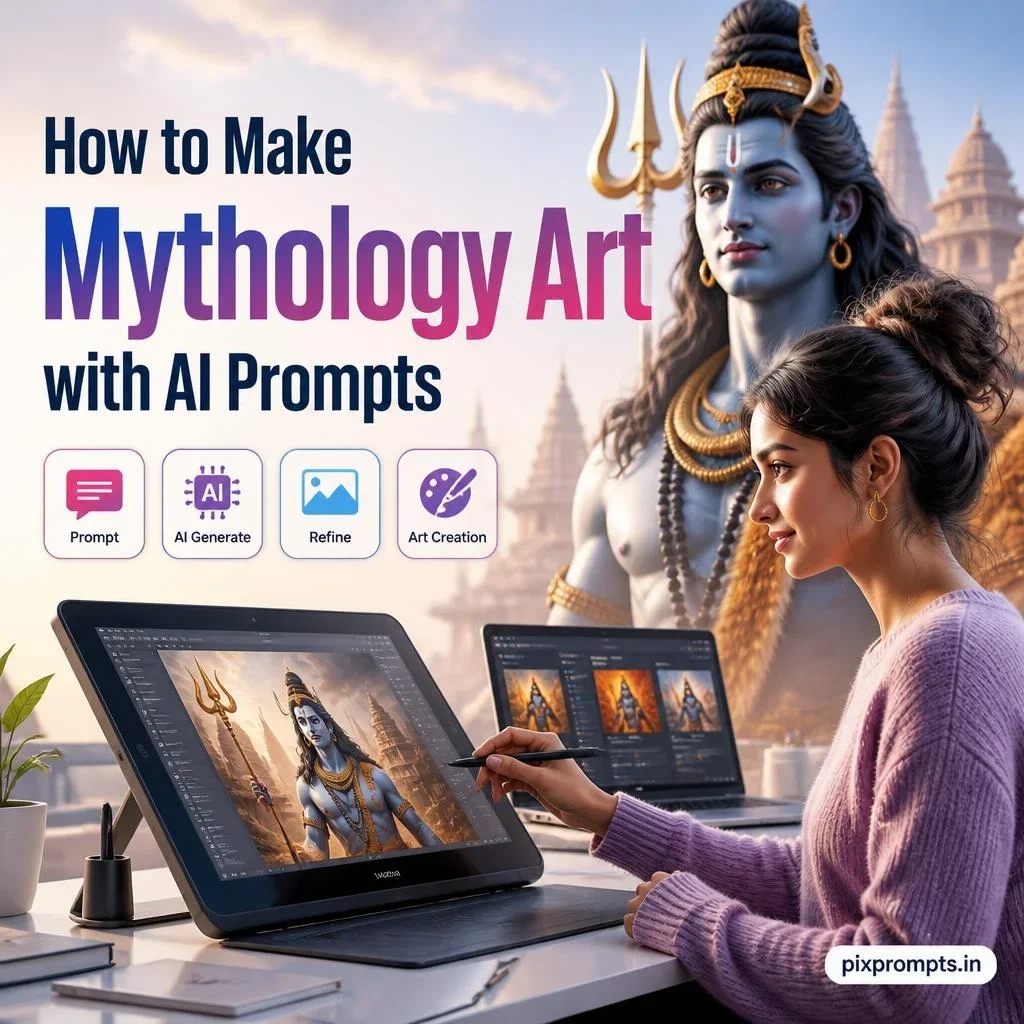
Indian mythology is rich with epic stories, divine figures, celestial landscapes and powerful symbolism. Artists have depicted these stories for centuries through temple murals, miniature paintings, Tanjore art and calendar art. AI tools now allow anyone to create mythology-inspired artwork for devotional, educational and creative purposes.
Because these images involve deeply held beliefs, they must be created with care and respect. This guide offers prompts for devotional art, epic scenes and traditional styles, along with guidance on sensitivity and accuracy.
Traditional Art Styles
Indian art traditions offer beautiful styles for mythology art. Tanjore painting features rich colours and gold leaf. Madhubani art uses intricate patterns and bold lines. Pattachitra features detailed mythological narratives. Rajput and Mughal miniatures show fine detail. Kerala murals have distinctive colours and forms.
Mentioning these styles in prompts creates artwork rooted in tradition rather than generic fantasy.
Respect and Sensitivity
Deities and sacred figures should be depicted respectfully, with traditional attributes, dignified poses and appropriate settings. Avoid humorous, disrespectful or inappropriate contexts. Be mindful that different communities have different traditions and sensitivities.
Accuracy of Symbols
Deities are often associated with specific symbols, colours, vehicles and attributes. Research or consult knowledgeable people to ensure accuracy. AI may mix attributes incorrectly, so review carefully.
Uses for Mythology Art
Devotional wallpapers, festival greetings, children’s educational storybooks, temple event posters and personal art collections are common uses. For commercial use, check the tool’s terms and be thoughtful about religious sensitivities.
Example: A Children’s Story Series
Parents and teachers can create a gentle illustrated series about stories children already learn at home or school. Each illustration should match the storyline accurately and be reviewed by someone familiar with the tradition. Combine illustrations with short, simple narration to create a lovely learning resource.
Keep the art style consistent across the series so children recognise characters from one page to the next.
Seeking Guidance
When creating devotional art for temples, community events or public posts, consider asking a priest, scholar or knowledgeable family member to review it. Their guidance ensures accuracy and helps the artwork be received with appreciation rather than concern.
Respectful collaboration between tradition and technology produces the most meaningful results.
Light, Colour and Mood
Devotional images often feel most peaceful with soft golden light, gentle glows and calm compositions. Deep reds, saffron, gold and soft blues are common in traditional art. Avoid harsh neon effects or dramatic action styles for sacred figures, as they can feel out of place.
Mythology Art Prompts
Copy any prompt below, paste it into your favourite AI tool and change the details in brackets to match your own photo or idea.
1. Tanjore style
Devotional artwork of Lord Krishna playing the flute in traditional Tanjore painting style, rich colours, gold leaf details, ornate border, peaceful divine expression, respectful and traditional.
2. Madhubani style
Madhubani style artwork depicting a peaceful scene from a mythological story, intricate patterns, bold black outlines, vibrant natural colours, traditional folk art.
3. Epic landscape
Majestic mythological landscape with the sacred Himalayas, a serene river flowing from the mountains, golden sunrise light, divine and peaceful atmosphere, painterly style.
4. Children’s storybook
Gentle illustrated scene for a children's book about the young Krishna playing with friends in a village, soft colours, joyful and respectful tone.
5. Ganesha festival art
Respectful devotional artwork of Lord Ganesha seated on a lotus, traditional attributes, warm golden background, festive marigold decorations, Kerala mural-inspired style.
6. Temple architecture
Ancient South Indian temple at dawn with towering gopuram, oil lamps glowing, devotees in the distance, warm spiritual atmosphere, realistic photography style.
How to Create Respectful Mythology Art
- Choose the purpose: Devotional, educational, festival or artistic.
- Pick a traditional style: Tanjore, Madhubani, Pattachitra or miniature.
- Describe respectfully: Use dignified poses and traditional attributes.
- Generate and review: Check accuracy of symbols and attributes.
- Seek feedback: Consult knowledgeable people when unsure.
- Share thoughtfully: Use appropriate contexts and captions.
How to Customise Any Prompt on This Page
Think of every prompt as a template with four parts: the subject, the setting, the style and the camera or lighting details. To make a prompt your own, change one part at a time. Swap the subject first, generate, and then experiment with the setting or lighting. This makes it easy to see which words are really shaping your image.
Keep a note of the versions you like. Over time you will build your own library of phrases that work well with your favourite tool, and creating new images will become much faster.
Make It Personal, Not Generic
Thousands of people may copy the same trending prompt on the same day, which is why results can start to look alike. The easiest way to stand out is to change one detail that only you would choose: your city’s skyline, a colour you always wear, your family’s festival tradition or an object with personal meaning.
Small personal details turn a trend into your own story, and people respond to stories far more than to templates.
Pro Tips for Better Results
- Traditional art styles create authentic, culturally rooted images.
- Use warm, divine lighting like golden glows.
- Keep compositions dignified and uncluttered.
- Research symbols before generating.
- Credit traditional art forms when sharing.
Common Mistakes to Avoid
Disrespectful contexts
Avoid humour or inappropriate settings.
Incorrect attributes
AI may mix symbols; review carefully.
Generic fantasy styles
Traditional styles feel more authentic.
Ignoring sensitivities
Be mindful of community beliefs.
Frequently Asked Questions
Is it okay to create mythology art with AI?
Many people do for devotional and creative purposes; respect and accuracy are key.
Can I sell mythology art?
Check tool terms and consider religious sensitivities.
Which style is best for devotional art?
Tanjore and Kerala mural styles are popular for devotional artwork.
Can AI depict stories from epics?
Yes, but review for accuracy and respectful portrayal.
How do I avoid errors in attributes?
Research and review carefully; regenerate if needed.
Quick Checklist
Before you finish, run through this short checklist:
- Choose the purpose
- Pick a traditional style
- Describe respectfully
- Generate and review
- Seek feedback
- Share thoughtfully
Conclusion
Mythology art with AI can be beautiful and meaningful when created with care. Use traditional art styles, depict sacred figures respectfully, verify symbols and share thoughtfully. Let technology serve tradition with reverence and creativity.
